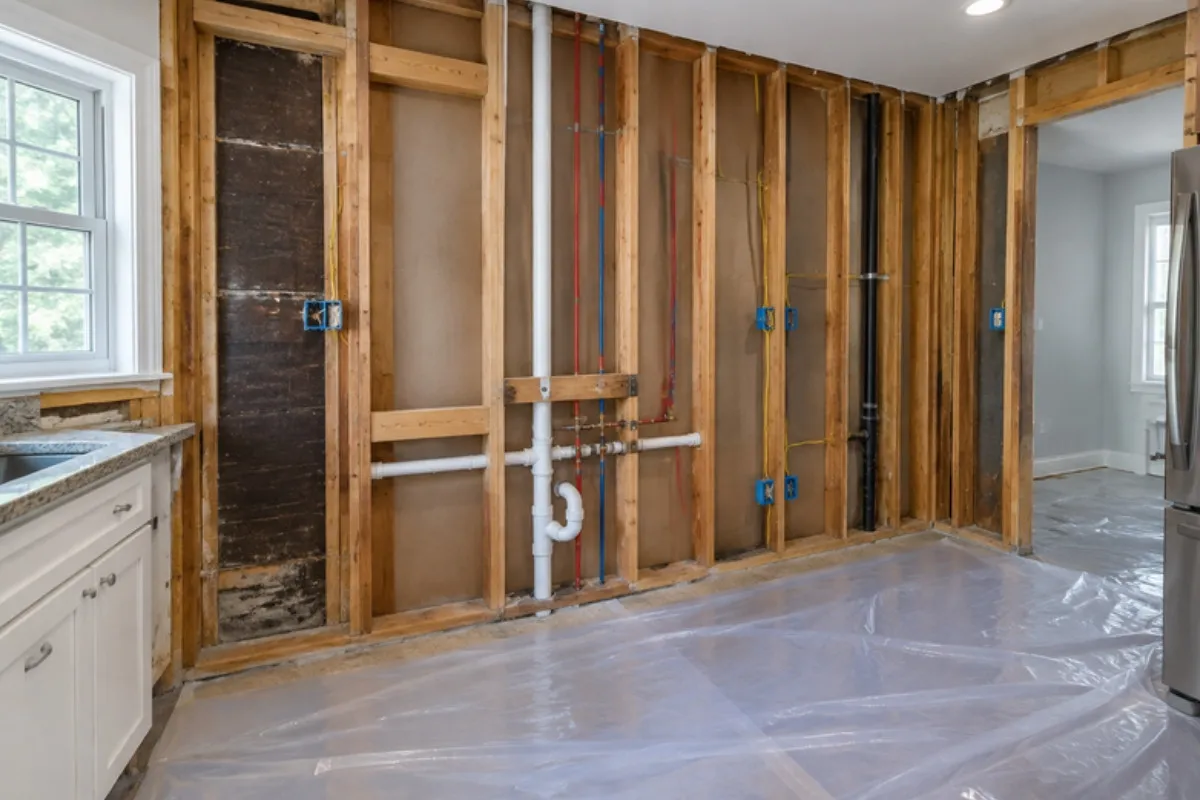
Mold in Conyers walls usually starts with water inside the cavity, from creek or river flooding, plumbing leaks, or rain finding its way past windows. The job is to stop the water, cut out affected drywall and insulation under containment, and dry the framing before rebuilding. Call the number on this page to be connected with a local mold remediation company in Conyers.
Local conditions in Conyers
Conyers is the Rockdale County seat, about 23 miles east of Atlanta along I-20, a former railroad watering stop and mill town that absorbed Milstead. The Yellow River and Honey Creek both run through the area. During the September 2009 floods, NWS reported the Yellow River at Conyers below Milstead cresting at 22.54 feet on September 22, against an 11-foot flood stage, and Honey Creek at Conyers topping its flood stage too. Local coverage reported more than 100 homes evacuated and power cut to Lake Capri, Riverside Mobile Home Park and River Chase Subdivision along Crowell Road. Homes that took water then and were repaired quickly may have damp insulation or framing that never fully dried.
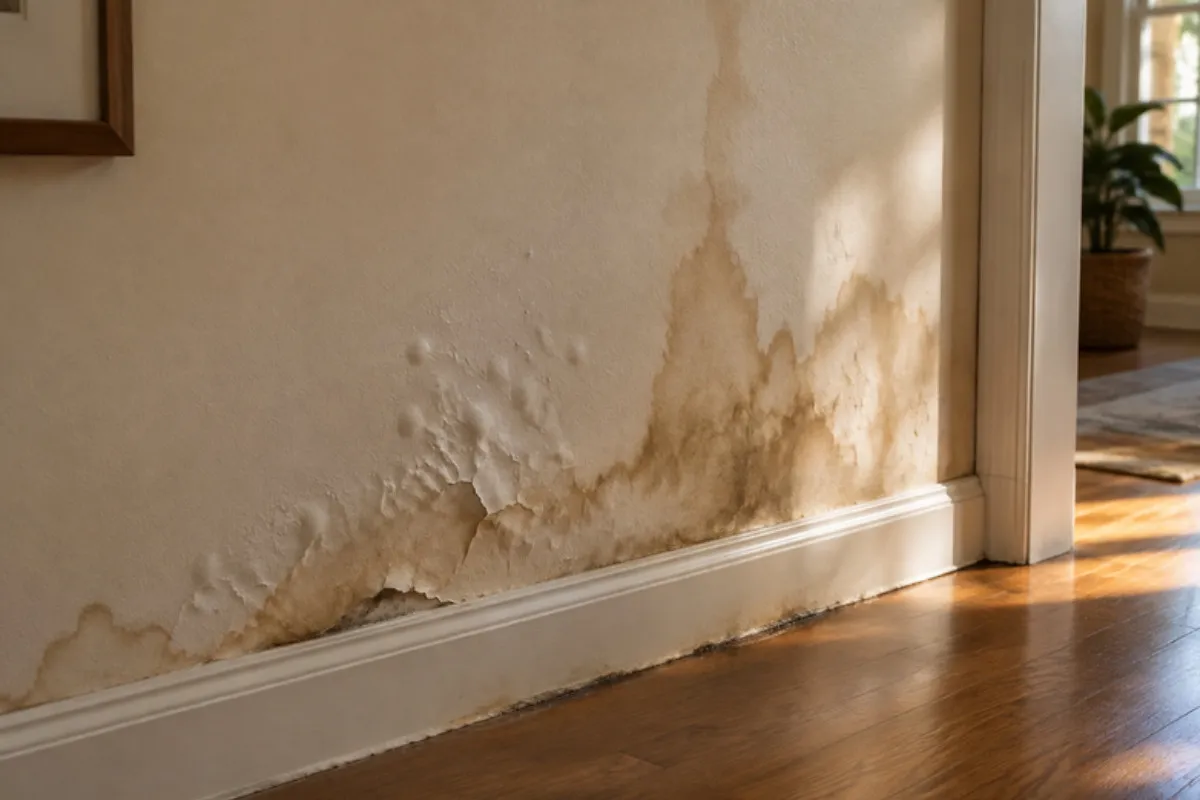
Most wall mold here has everyday causes: plumbing leaks, failed window seals, and summer humidity on cool walls. A slow drip from a supply line behind a kitchen sink or a toilet can soak the bottom of a wall for months, and the first sign is often a swollen baseboard rather than a stain. Older houses may have plaster walls, which hide moisture longer than drywall.
Clean it, or remove the drywall?
| Situation | Usual approach |
|---|---|
| Light spotting on a dry, firm wall | Clean the surface, fix ventilation, monitor |
| Wall wet from a leak for more than a day or two | Open the wall, dry the cavity, replace wet board |
| Wall stood in floodwater | Remove drywall and insulation above the water line, dry and clean studs |
| Odor with no visible growth | Moisture mapping and a small inspection cut first |
EPA's post-disaster guidance says to assume mold when a flooded home could not be dried within 24 to 48 hours.
Signs to watch for
- A tide line along a lower-level wall
- Baseboards that have swelled or pulled away
- Drywall that feels spongy near the floor
- Paint that blisters under windows
- A musty smell after heavy rain
Timing
The weeks after heavy rain and the humid peak of late summer are when wall problems show most. Do not wait out an active leak. When the drywall goes back up, the City of Conyers Department of Planning and Inspection Services inspects residential framing and insulation work and takes permit applications through its online Public Portal.
Mold in Walls & Drywall questions in Conyers
Water got into my walls during a flood or storm. What now?
Can the insulation behind moldy drywall be saved?
I rent. What can I do about mold in my walls?
Do I need a permit to rebuild the wall afterward?
More mold services in Conyers
Mold in Walls & Drywall nearby
Sources
- EPA: Mold Cleanup in Your Home
- EPA: Homeowner's and Renter's Guide to Mold Cleanup After Disasters (pdf)
- National Weather Service Atlanta: The Epic Floods of September 2009
- Covington News: Rockdale flood updates (2009)
- City of Conyers: Building Inspections
- City of Conyers: Code Enforcement
- O.C.G.A. 44-7-13: Landlord's duties as to repairs (Justia)
- Conyers, Georgia (Wikipedia)
Last updated: