Mold testing means taking air, surface or material samples and sending them to a lab to identify what is growing and how much of it is in the air compared with outdoors. EPA says sampling is usually unnecessary when you can already see mold; testing earns its cost when the source is hidden, when you need records for a sale, lease or claim, or when you need proof a cleanup worked. Call the number on this page to be connected with a local mold inspector or remediation company in Atlanta.
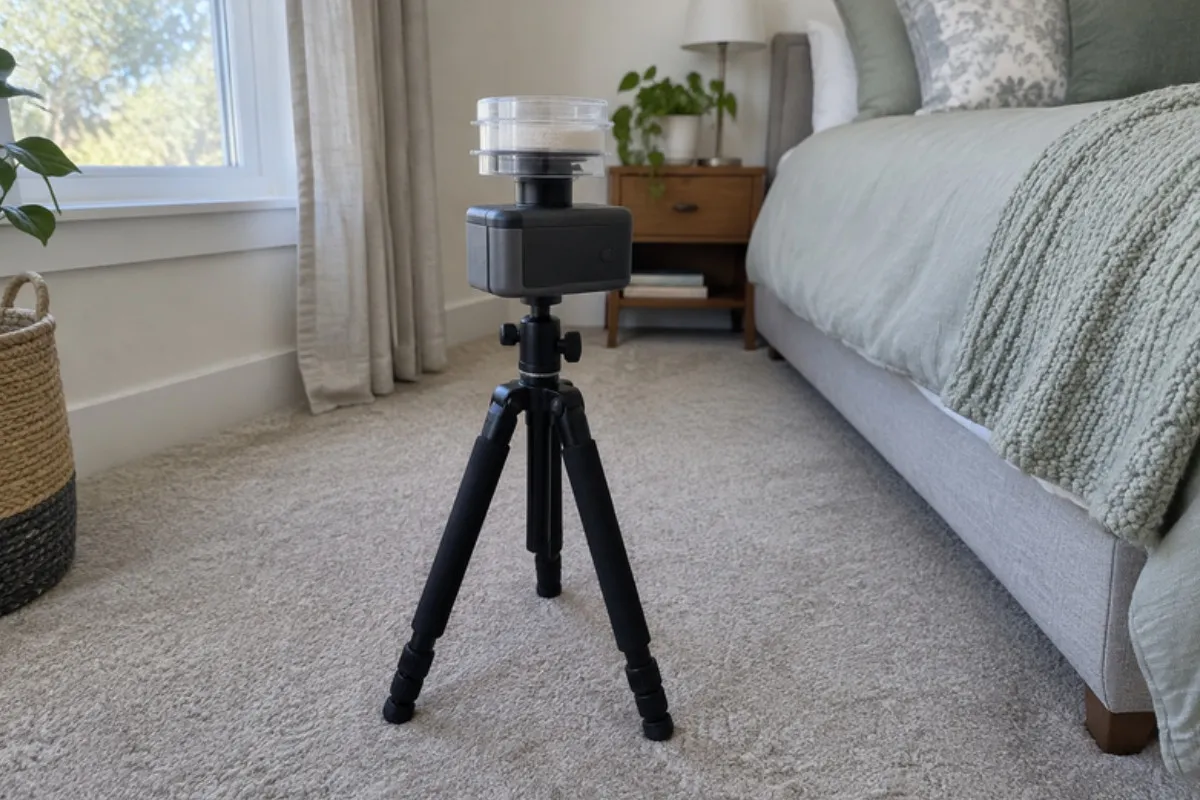
Decide what you are trying to learn
Before anyone opens a sample cassette, write down the question. The answer decides which test makes sense, and sometimes that no test is needed.
| Your situation | What usually helps |
|---|---|
| Visible growth on a wall, ceiling or joist | Usually no lab test. Find the moisture source and plan removal. |
| Musty odor, nothing visible | Inspection with moisture readings, plus indoor and outdoor air samples to compare |
| Buying or selling a house | Inspection with a written report; samples where the inspector finds damp areas |
| Dispute with a landlord or insurer | Dated photos, moisture readings and lab results kept together |
| After a cleanup | Clearance testing by someone other than the remover |
Why hidden mold is common in Atlanta houses
Hot, humid summers and air conditioning that runs much of the year mean ductwork often sits in a crawl space or attic where warm, wet air meets cold metal. Red clay drains slowly, so water can sit against foundation walls after heavy thunderstorms. Older homes over vented crawl spaces and hillside houses with daylight basements give mold plenty of places to grow out of sight. That is where air sampling and a moisture meter can point the search before anyone cuts drywall.
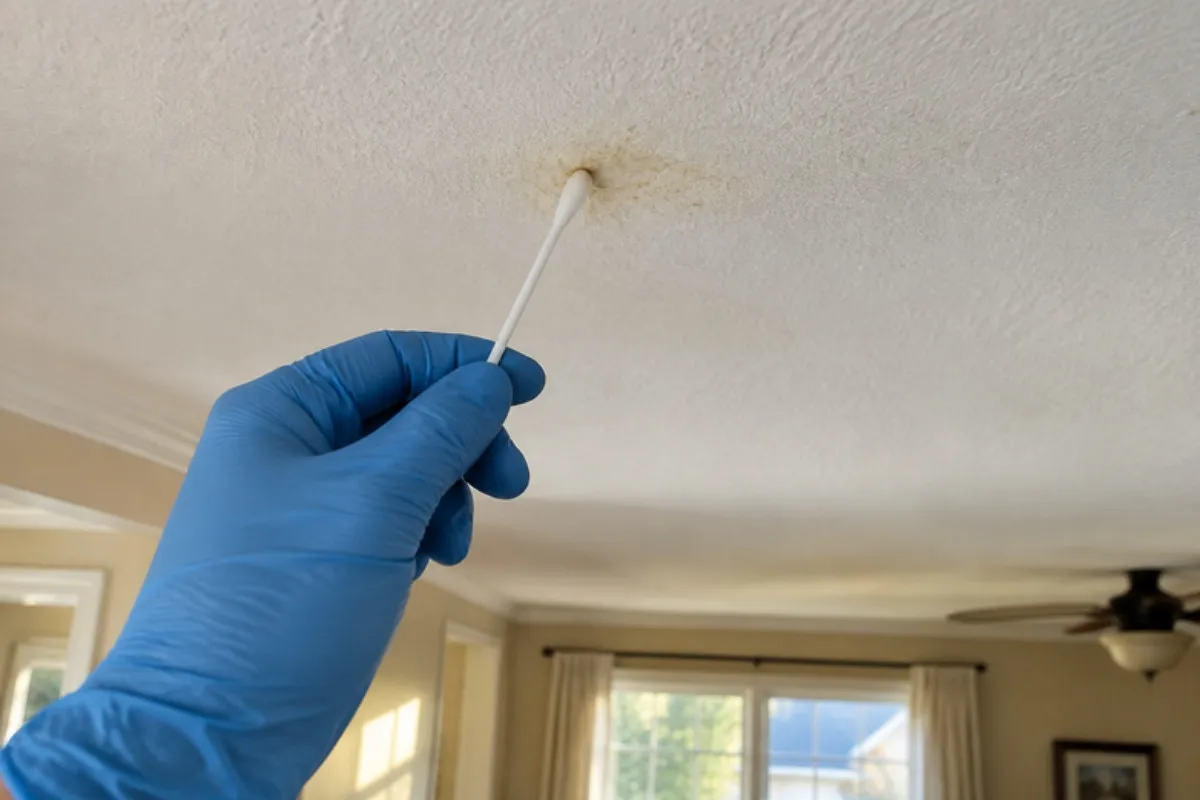
The three kinds of samples
- Air samples pull a measured volume of air through a cassette. One should be taken outdoors as a baseline, because the comparison matters more than any single number.
- Surface samples (swab or tape lift) identify what is on a stain or confirm whether a cleaned area is actually clean.
- Bulk samples send a piece of drywall, insulation or carpet to the lab.
What results can and cannot tell you
There are no EPA or federal limits for mold or mold spores, and Georgia DPH says mold testing has no enforceable state or federal standards. A lab report shows types and counts; it does not hand you a pass or fail grade. The color of a mold says nothing reliable about how risky it is. A good tester explains results against the outdoor sample and against what was found during the walk-through, and does not use lab names to sell a bigger job.
Cost
Angi's 2026 national ranges put mold testing with air and surface sampling at $250-$500, with a basic air test around $250-$350. HomeGuide's 2026 national ranges list air sampling at $100-$300 per test and surface sampling at $50-$200. Angi's Atlanta cost guide reports a full mold inspection in Atlanta at $352-$1,262. The number of rooms sampled, crawl space or attic access, and lab turnaround drive the price.
Keep the tester and the remover separate
Georgia has no state mold license, and no rule says the company that tests must be different from the one that removes mold. Angi recommends using separate companies anyway, so the person measuring the problem has nothing to gain from its size.
Mold Testing questions from Atlanta homeowners
Should I test mold I can already see?
Are home mold test kits from the hardware store useful?
Will the Fulton County Board of Health test my home for mold?
Does Georgia certify mold testers?
Related mold services in Atlanta
Helpful guides
Mold Testing in nearby cities and towns
Fulton County
DeKalb County
Cobb County
Gwinnett County
Clayton County
Henry County
Douglas County
Fayette County
Cherokee County
Forsyth County
Rockdale County
Paulding County
Coweta County
Walton County
Bartow County
Carroll County
Sources
Last updated: