Mold inside a wall almost always traces back to water that got into the cavity, from a plumbing leak, a failed window or a damp foundation wall. The job is to find and stop that water, open the wall far enough to remove every piece of damaged drywall and insulation, dry and clean the framing, and then rebuild. Call the number on this page to be connected with a local mold remediation company in Atlanta.
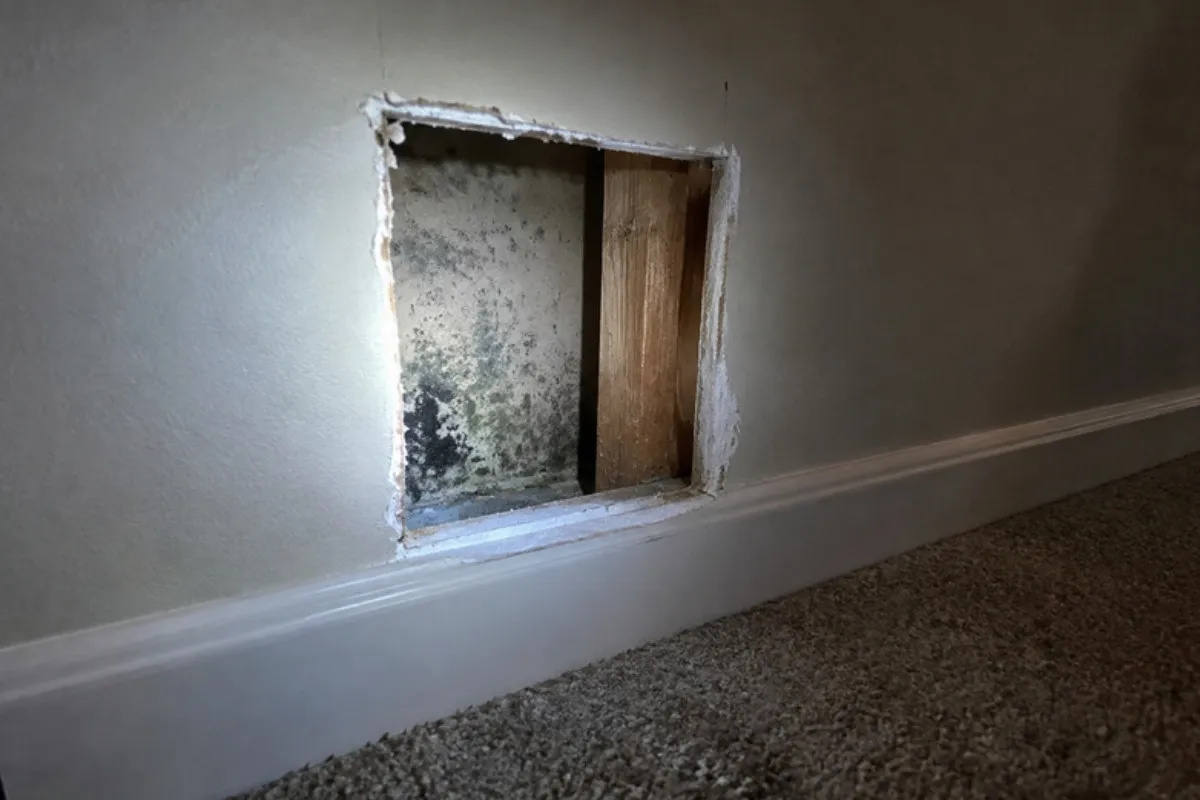
Clues that the problem is inside the wall
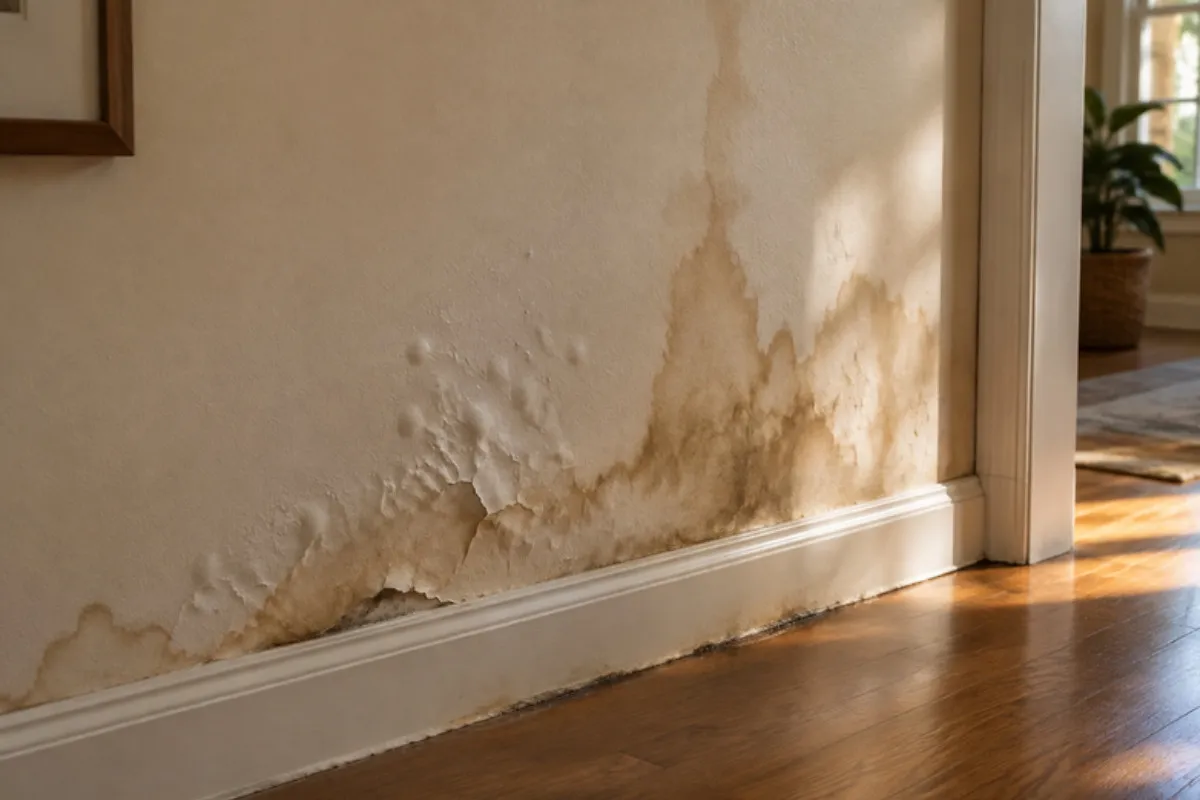
- A brown or yellow ring that keeps growing, often below a window, a bathroom or a second-floor laundry room.
- Paint that bubbles or wallpaper that lifts away from the surface.
- Drywall that feels soft or crumbles when pressed near the baseboard.
- A musty odor that is strongest at one wall or inside a closet on an exterior wall.
Spots on the surface can be plain mildew from bathroom steam. Growth that returns after wiping, or staining with no surface explanation, points to moisture behind the drywall.
Where the water comes from in Atlanta homes
Supply lines and drains inside walls leak slowly for months before anyone notices. Heavy summer thunderstorms test window flashing, siding and brick weep holes. On hillside lots, finished daylight basements put drywall right against below-grade walls, and red clay that stays wet after rain keeps pushing moisture through the masonry. An AC condensate line routed through a wall cavity can also drip unseen. Homes along creeks that took water in the September 2009 floods may have walls that were closed back up before they fully dried.
How hidden mold gets confirmed
A good inspector uses a moisture meter and often a thermal camera to map the wet area, then may make a small inspection cut or use a borescope to look inside. EPA notes that sampling is usually unnecessary when mold is visible, so testing a wall you are already opening rarely adds much. Testing can help when a smell has no visible source.
What opening and rebuilding the wall involves
- Fix the leak or drainage problem first, or the growth comes back.
- Seal off the room with plastic and run HEPA air filtration while drywall comes out.
- Cut past the visible edge of the stain until the board behind it is clean and dry.
- Bag and remove moldy drywall and insulation. EPA says porous materials often have to be thrown away, and you should never paint or caulk over mold.
- Clean and dry the studs and sheathing, confirm with a meter, then rebuild.
Cost and who does the rebuild
Angi's Atlanta cost guide reports most pros charge $12 to $29 per square foot for remediation, with drywall repair running $1,174 to $3,405 on top. HomeGuide's 2026 national ranges put a small drywall section at $500 to $1,500 and a large wall section at $1,500 to $6,000. Georgia has no mold license, but rebuilding walls is construction work, and Georgia law defines a residential contractor by work over $2,500. Ask whether the company holds a Georgia residential or general contractor license, check it on the Secretary of State's GOALS Verify Now lookup, and confirm current rules with the state licensing board. Inside city limits, ask the contractor whether the rebuild needs a permit from the Office of Buildings.
Mold in Walls & Drywall questions from Atlanta homeowners
Can I just paint over a mold stain on drywall?
How much drywall has to come out?
Do I need testing before opening a wall?
Who should rebuild the wall afterward?
Related mold services in Atlanta
Mold in Walls & Drywall in nearby cities and towns
Fulton County
DeKalb County
Cobb County
Gwinnett County
Clayton County
Henry County
Douglas County
Fayette County
Cherokee County
Forsyth County
Rockdale County
Paulding County
Coweta County
Walton County
Bartow County
Carroll County
Sources
- EPA: Mold Cleanup in Your Home
- EPA: A Brief Guide to Mold, Moisture and Your Home
- EPA: Mold Information Slideshow (testing and sampling)
- Angi: Mold Remediation Cost in Atlanta, GA
- HomeGuide: Mold Removal Cost (2026)
- O.C.G.A. 43-41-2: Definitions (Justia, 2010 code)
- Georgia SOS GOALS: Verify Now
- City of Atlanta: Office of Buildings
- National Weather Service Atlanta: The Epic Floods of September 2009
Last updated: