Mold Remediation Atlanta is a free referral service, not a mold company, and it has no crews or inspectors of its own. Your call is routed to an independent local mold remediation company or mold inspector that serves your area, talks through the problem with you and sets its own price. Call the number on this page to be connected with a local mold remediation company in Atlanta.
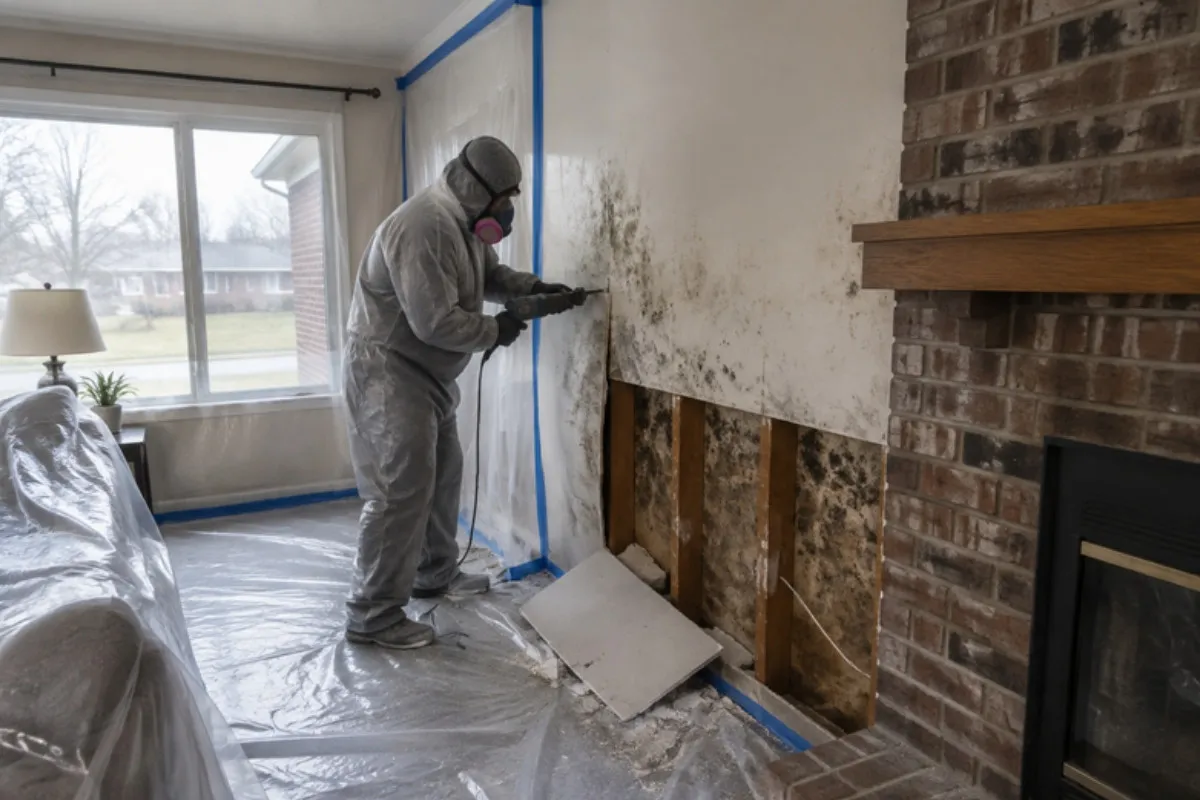
Mold services in Atlanta
What happens when you call
The number on this page rings through to an independent business that takes mold jobs around metro Atlanta. It helps to have a few details ready: where you see or smell the mold, about how much area it covers, what got wet (a roof leak, a plumbing drip, water seeping through a basement wall, a sweating AC line) and how long it has stayed damp. The company decides with you whether a site visit makes sense, explains how it would handle the job and quotes its own price. Calling does not commit you to anything, and any agreement is between you and that company.
Why mold takes hold in metro Atlanta homes
Atlanta's humid subtropical climate brings long, sticky summers and mild, wet winters, so air conditioning runs much of the year and moisture has plenty of chances to collect. Many older houses sit over vented crawl spaces, where humid summer air meets cool ductwork and damp soil. Hillside lots often come with full or daylight basements dug into red clay, which drains slowly and holds water against foundation walls after a storm. Heavy thunderstorms overwhelm gutters and push creeks out of their banks, and the September 2009 floods showed how quickly water can reach basements and crawl spaces in neighborhoods along metro creeks. EPA's rule of thumb applies everywhere: dry wet materials within 24 to 48 hours, keep indoor humidity below 60 percent, and fix the water source, or the mold comes back.
Checking a company in Georgia
Georgia has no state license or certification for mold remediation or mold assessment, and the Department of Public Health says there are no enforceable state or federal standards for mold inspection, testing or removal. Voluntary credentials such as IICRC or ACAC show training, not state approval. Where the state does step in is construction: Georgia law defines a residential contractor by work over $2,500, and jobs that tear out and rebuild drywall, subfloor or framing can cross that line. Ask whether the company holds a Georgia residential or general contractor license, look it up on the Secretary of State's GOALS Verify Now lookup, and confirm current rules with the state licensing board. Georgia does not require the inspector and the remover to be different firms, but an independent inspector for the assessment and the final check is good practice, since that person has nothing to gain from a larger job.
What mold remediation costs in Atlanta
| Item (Angi's Atlanta cost guide) | Typical range |
|---|---|
| Overall remediation job | $1,249 to $4,363 (average $2,775) |
| Crawl space | $587 to $2,348 |
| Basement | $587 to $3,522 |
| Attic | $1,174 to $4,696 |
| Mold inspection | $352 to $1,262 |
Angi reports most Atlanta pros charge $12 to $29 per square foot. The final number depends on how large the affected area is, how much material has to be removed, how hard the crawl space or attic is to reach, and whether ductwork, drywall or flooring has to be replaced afterward.
If you rent
This is general information, not legal advice. Under O.C.G.A. 44-7-13, Georgia landlords must keep the premises in repair. Georgia Legal Aid advises tenants to report problems in writing and keep copies, and notes that Georgia law does not allow tenants to withhold rent. If repairs do not happen, local housing code enforcement can inspect leaks and other violations; inside the city, that is the City of Atlanta's Housing Code Enforcement Division. The Georgia Landlord-Tenant Handbook from DCA is another useful starting point.
Areas served
Calls are connected across Atlanta and Fulton, DeKalb, Cobb, Gwinnett, Clayton, Henry, Douglas, Fayette, Cherokee and Forsyth counties, along with nearby communities. On health, EPA says mold can irritate the eyes, skin, nose, throat and lungs, and people with asthma or weakened immune systems should stay away from moldy areas. Talk with a health professional about any health concerns.
Cities and towns we connect callers in
Fulton County
DeKalb County
Cobb County
Gwinnett County
Clayton County
Henry County
Douglas County
Fayette County
Cherokee County
Forsyth County
Rockdale County
Paulding County
Coweta County
Walton County
Bartow County
Carroll County
Common questions
Is Mold Remediation Atlanta a mold company?
Does Georgia require a mold license?
How much mold can I clean up myself?
Which areas does the service cover?
Guides
Sources
- EPA: Mold Cleanup in Your Home
- EPA: A Brief Guide to Mold, Moisture and Your Home
- EPA: Mold Information Slideshow (testing and sampling)
- Georgia DPH: Indoor Air Quality/Mold
- Georgia SOS: Residential and Commercial General Contractors FAQ
- Georgia SOS GOALS: Verify Now
- O.C.G.A. 43-41-2: Definitions (Justia, 2010 code)
- O.C.G.A. 44-7-13: Landlord's duties as to repairs (Justia)
- GeorgiaLegalAid.org: Repairs to Rental Properties
- Georgia DCA: Georgia Landlord-Tenant Handbook
- City of Atlanta: FAQs (code enforcement)
- Angi: Mold Remediation Cost in Atlanta, GA
- Angi: How to Hire a Mold Remediation Company
- National Weather Service Atlanta: The Epic Floods of September 2009
Last updated: