Post-remediation clearance testing is an independent check that the work area is clean and dry before containment comes down and before walls, floors or insulation are rebuilt. It combines a visual inspection, moisture readings and usually surface and air samples compared with an outdoor baseline. Call the number on this page to be connected with a local mold inspector or remediation company in Atlanta.
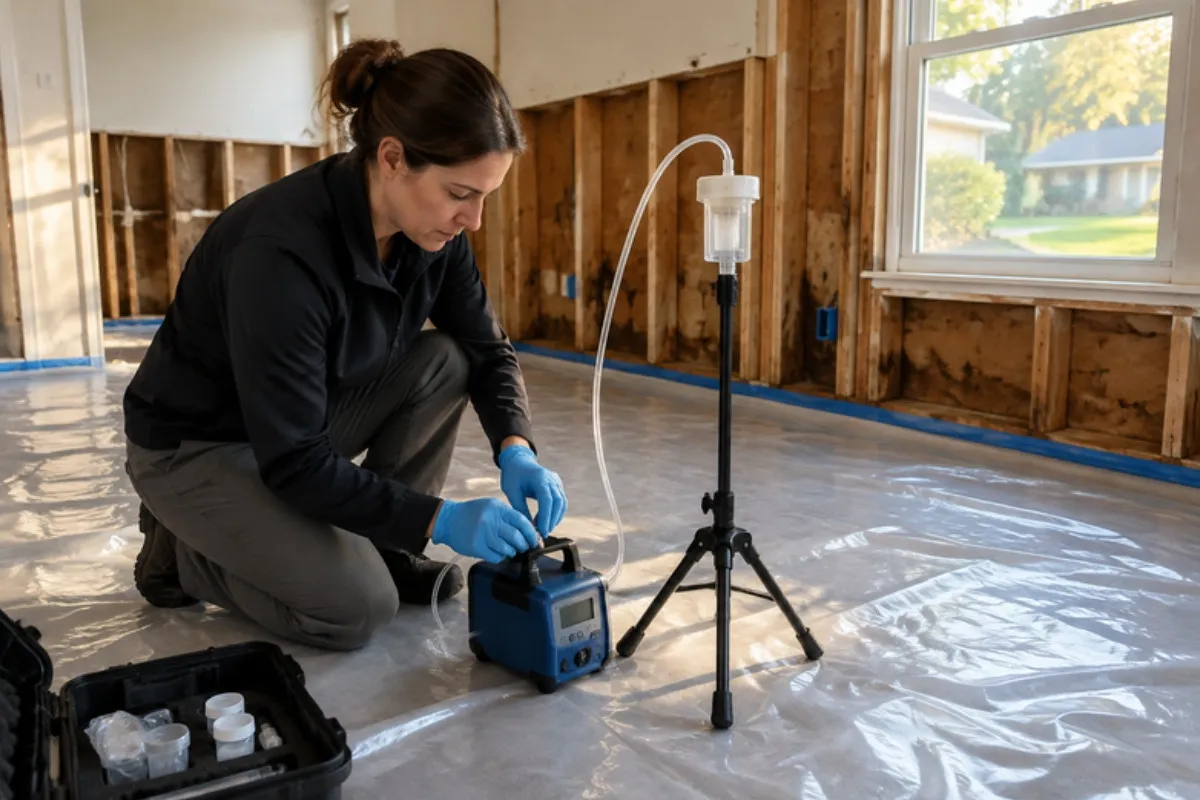
Paying for mold removal without a final check means taking the remover's word that the job is done. Clearance testing replaces that with a documented result you can keep for a future sale, an insurance file or a landlord dispute.
Agree on the pass criteria before work starts
EPA sets no federal limits for mold or mold spores, and Georgia DPH says remediation has no enforceable state or federal standards. That means "passing" has to be defined in writing up front. A sound clearance agreement usually covers:
- No visible mold or mold-stained debris inside the work area
- Building materials dried to normal moisture readings, with the leak or humidity source fixed
- Indoor air samples similar in type and count to the outdoor sample
- Surface samples on cleaned framing or subfloor, which EPA notes can help show an area was adequately cleaned
- What happens, and who pays, if the area fails and needs another round
Timing matters on an Atlanta job
- The remediation company finishes removal, HEPA vacuuming and cleaning, and leaves containment and air filtration in place.
- The area is dried. In a humid Atlanta summer that can take dehumidifiers running for days, especially in a crawl space or basement where red clay keeps the ground damp.
- The clearance tester inspects and samples inside the containment while it is still sealed.
- Lab results come back and are compared with the agreed criteria.
- Only after a pass does containment come down and the rebuild begin.
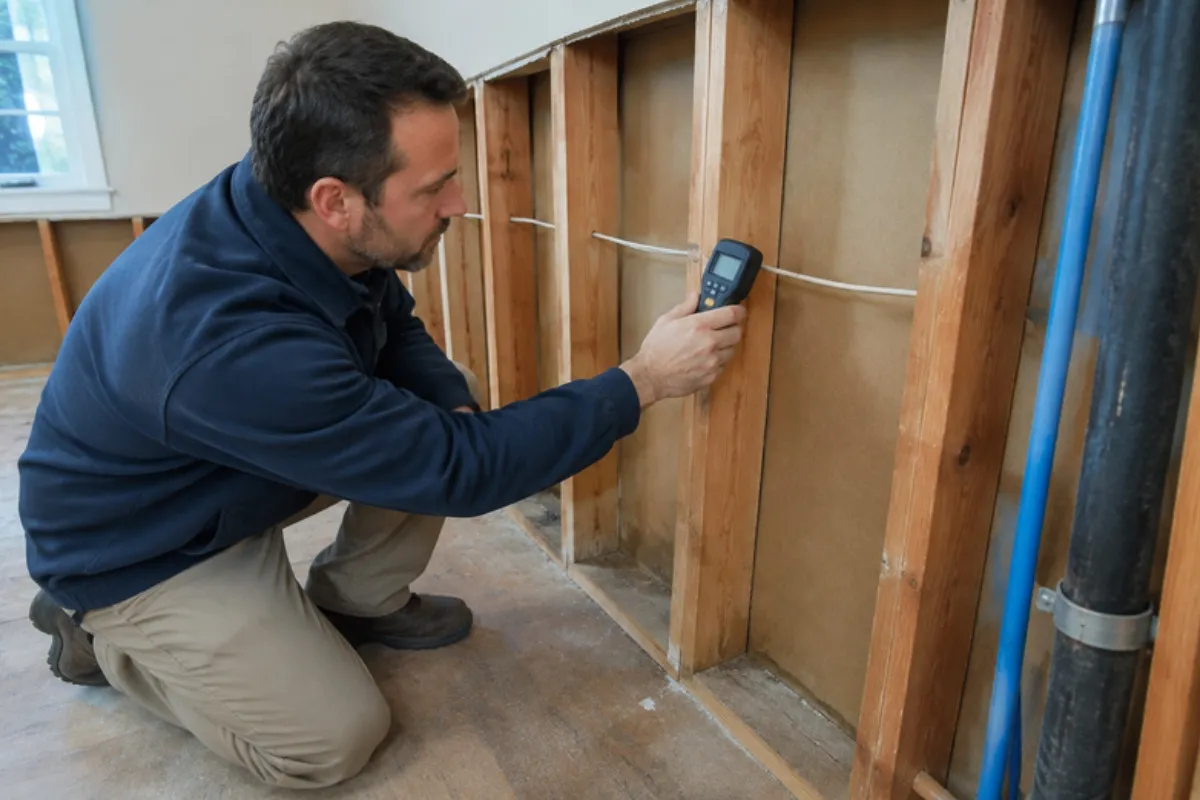
Rebuilding first and testing later defeats the purpose. Once new drywall and paint go up, nobody can see the framing behind them.
Who should do it
No Georgia rule requires the tester and the remover to be different companies, but Angi recommends separate companies so the person grading the work did not do it. Hire the clearance tester directly rather than through the remediation company, and ask them to explain results in plain terms.
If the rebuild involves new drywall, framing or subfloor, ask whether that contractor holds a Georgia residential or general contractor license and check it on the Secretary of State's GOALS Verify Now lookup. Georgia law defines a residential contractor by work over $2,500; confirm current rules with the state licensing board. Ask the contractor whether the rebuild needs a permit from the City of Atlanta Office of Buildings.
What it costs
Clearance usually costs less than the original inspection because the area is defined. HomeGuide's 2026 national ranges put air sampling at $100-$300 per test and surface sampling at $50-$200; the number of rooms and samples sets the total, and metro Atlanta prices vary.
Post-Remediation Clearance Testing questions from Atlanta homeowners
Is clearance testing required in Georgia?
What if the area fails clearance?
Can the company that removed the mold do the clearance test?
Should I stay out of the house until clearance?
Related mold services in Atlanta
Helpful guides
Post-Remediation Clearance Testing in nearby cities and towns
Fulton County
DeKalb County
Cobb County
Gwinnett County
Clayton County
Henry County
Douglas County
Fayette County
Cherokee County
Forsyth County
Rockdale County
Paulding County
Coweta County
Walton County
Bartow County
Carroll County
Sources
- EPA: Mold Information Slideshow (testing and sampling)
- EPA: Mold Cleanup in Your Home
- Georgia DPH: Indoor Air Quality/Mold
- Angi: How to Hire a Mold Remediation Company
- HomeGuide: Mold Inspection Cost (2026)
- Georgia SOS GOALS: Verify Now
- O.C.G.A. 43-41-2: Definitions (Justia, 2010 code)
- City of Atlanta: Office of Buildings
Last updated: