Commercial mold work follows the same basics as a house job, fixing the moisture and physically removing the growth, but it adds containment planning around tenants, HVAC decisions and written records. EPA publishes a separate guide for schools and commercial buildings that most firms build their plans around. Call the number on this page to be connected with a local mold remediation company in Atlanta.
Who regulates mold in Atlanta buildings
Very little is mandatory. Georgia DPH says indoor air quality is not a regulated program, and its environmental health rules cover tourist accommodations such as hotels and motels rather than offices or apartments. The Fulton County Board of Health's complaint office states it does not respond to mold complaints. That puts the responsibility on the owner or manager, and it makes a clear written scope and a record of the work more important than usual.
Typical commercial situations
| Property type | Common source | Planning issue |
|---|---|---|
| Office suites | Roof leaks, ceiling tile above HVAC units | Working evenings or weekends |
| Apartment buildings | Shared plumbing stacks, leaking units above | Several units and tenant notices |
| Restaurants | Dish areas, walk-in coolers, grease-trap rooms | Closing sections without shutting down |
| Churches and schools | Basements, gyms, older roofs | Scheduling around occupants |
How a well-run job is organized
EPA's commercial guide uses about 10 square feet as the line beyond which a professional plan is warranted, and it scales precautions with the size of the area. Expect the company to:
- Identify and stop the water source, including roof, plumbing or condensate problems.
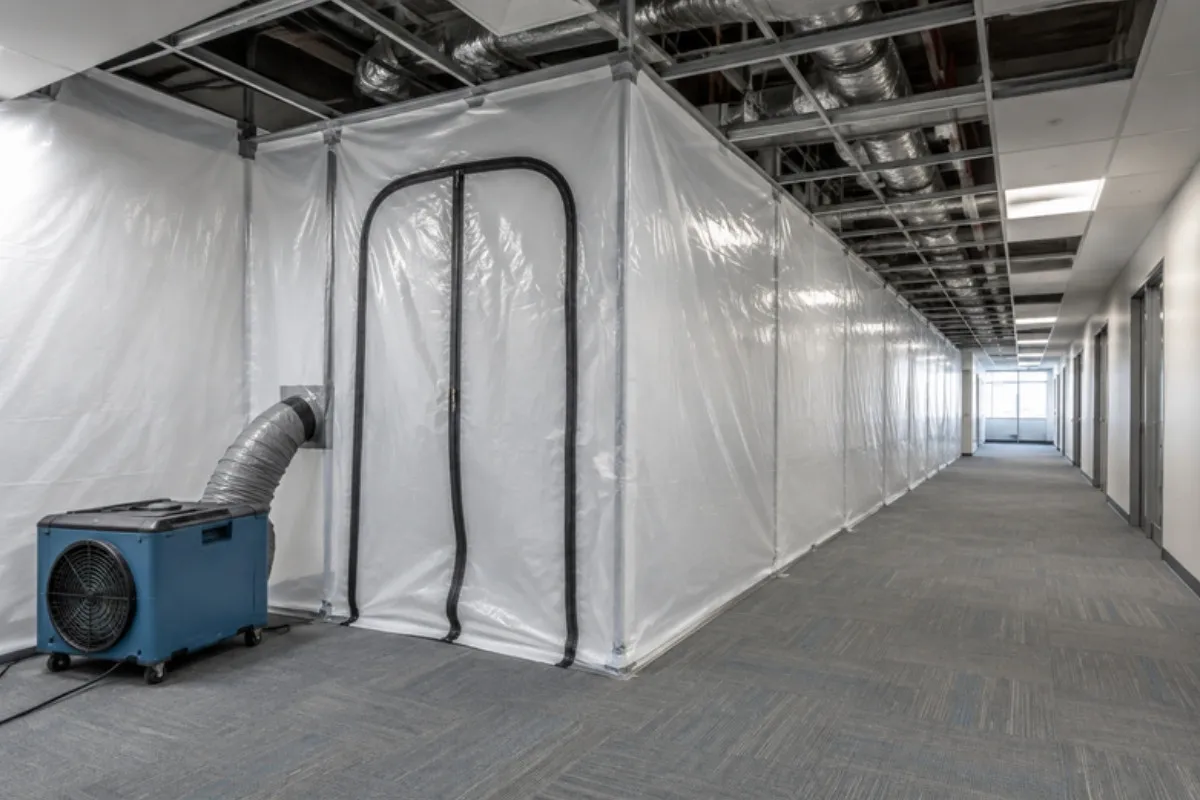
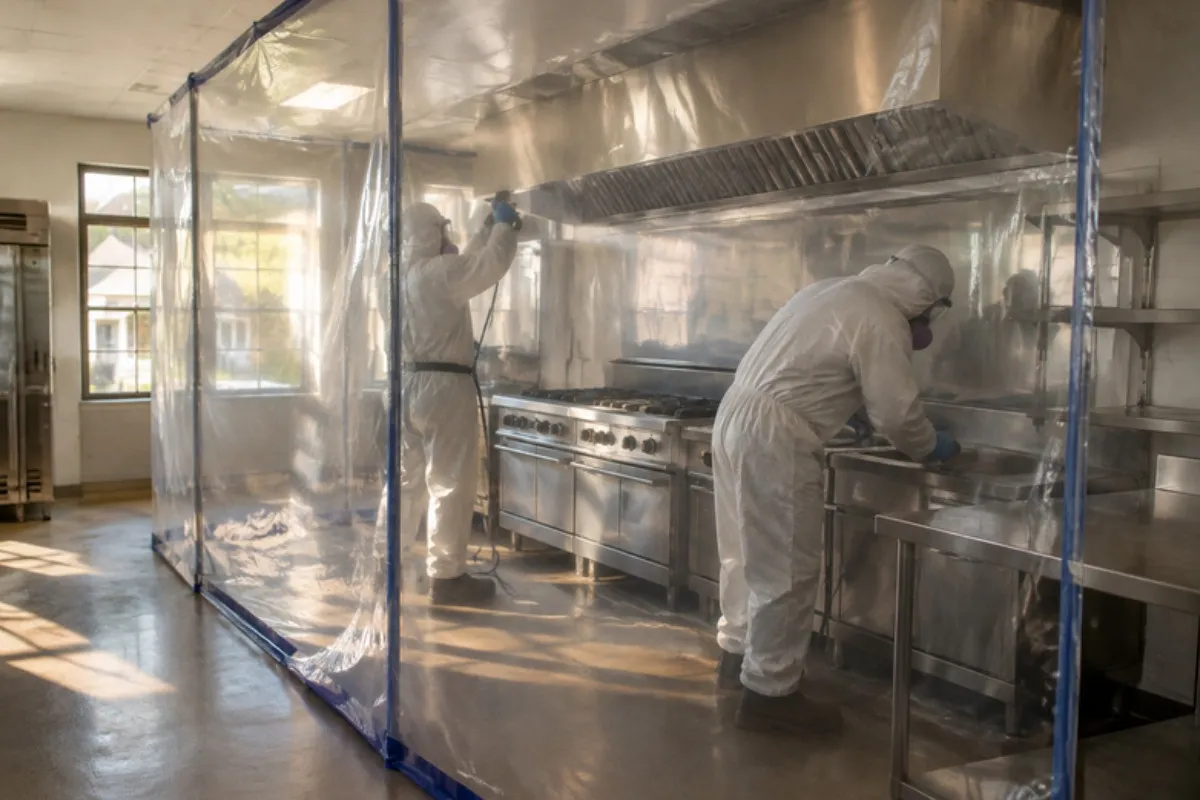
- Build containment with plastic sheeting and negative air so spores stay in the work zone.
- Shut down or isolate air handlers serving the area. EPA warns against running a system you suspect is contaminated.
- Remove porous materials such as ceiling tile and carpet that cannot be cleaned, and clean hard surfaces.
- Document conditions with photos and moisture readings before, during and after.
Contracts, contractors and clearance
Georgia has no mold license or certification, and DPH says there are no enforceable state or federal standards for mold work. When a job includes demolition and rebuild, the general contractor license matters: Georgia's general contractor credential is not limited by type of work, while plumbing, electrical and similar trades need their own. Check the company on the Secretary of State's GOALS Verify Now lookup. Voluntary certifications such as IICRC or ACAC show training, not state approval. For assessment and final clearance, many managers hire an independent inspector who has no stake in the remediation contract, which Angi recommends.
What drives price
Angi's Atlanta cost guide covers homes, so treat it as a rough floor rather than a commercial benchmark. Bids depend on square footage, ceiling height, how much containment the occupied areas need, after-hours labor, HVAC involvement and rebuild. Ask for a written scope that lists each area and what will be removed.
Commercial Mold Remediation questions from Atlanta homeowners
Does Fulton County inspect mold in commercial buildings?
Can the building stay open during remediation?
Should the same company test and remediate?
What paperwork should I keep?
Related mold services in Atlanta
Helpful guides
Commercial Mold Remediation in nearby cities and towns
Fulton County
DeKalb County
Cobb County
Gwinnett County
Clayton County
Henry County
Douglas County
Fayette County
Cherokee County
Forsyth County
Rockdale County
Paulding County
Coweta County
Walton County
Bartow County
Carroll County
Sources
- EPA: Mold Remediation in Schools and Commercial Buildings (pdf)
- EPA: Mold Cleanup in Your Home
- Georgia DPH: Indoor Air Quality/Mold
- Fulton County Board of Health
- Georgia SOS: Residential and Commercial General Contractors FAQ
- Georgia SOS GOALS: Verify Now
- Angi: How to Hire a Mold Remediation Company
- Angi: Mold Remediation Cost in Atlanta, GA
Last updated: