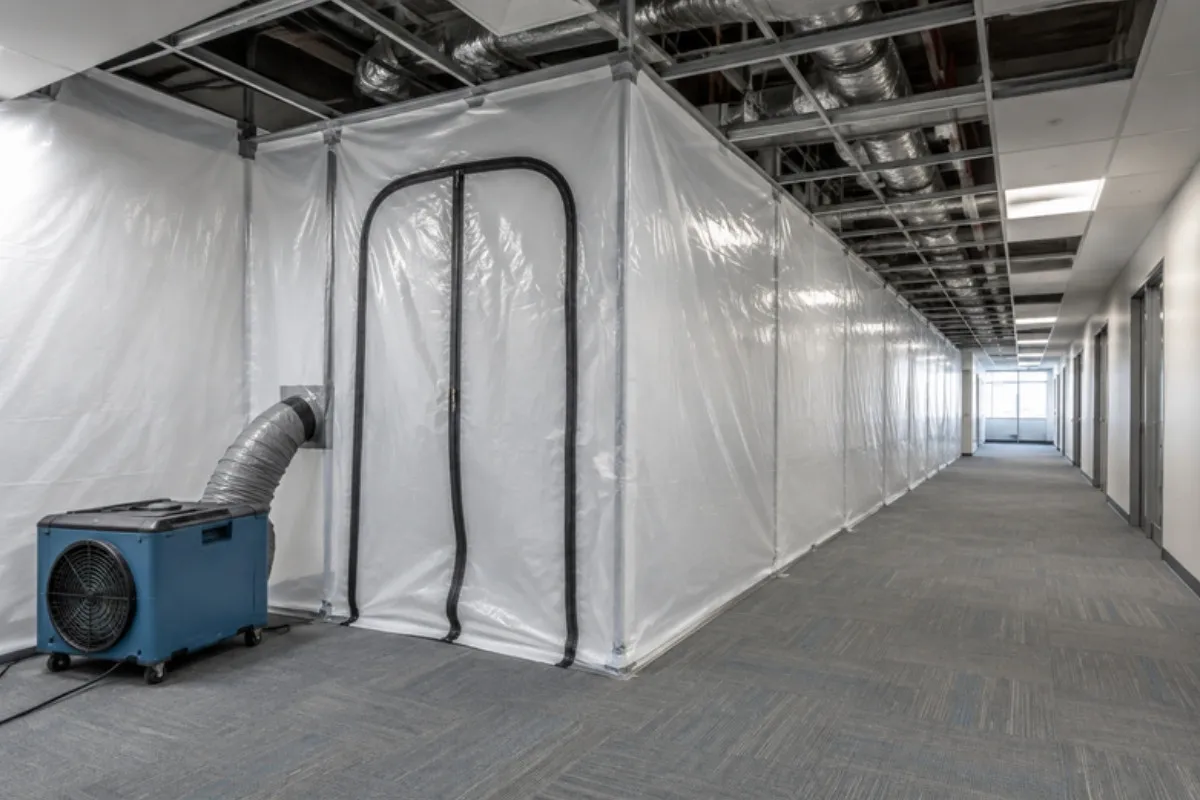
Powder Springs sits in the Sweetwater Creek basin, where creeks rose past the 500-year flood level in 2009, so commercial mold here is often tied to water intrusion. Remediation dries the structure, contains the affected space and removes porous materials that stayed wet. Call the number on this page to be connected with a local mold remediation company in Powder Springs.
How bad has flooding been in Powder Springs?
Severe, at least once. During the September 2009 floods, three NWS gauges listed at Powder Springs went above flood stage: Powder Springs Creek crested at 19.82 feet against a 12-foot stage, Noses Creek at 23.20 feet against 11, and Sweetwater Creek at 31.45 feet against 13. NWS says the Sweetwater Creek basin rose to the 500-year flood level, and the U.S. Geological Survey reports flood magnitudes on Powder Springs Creek greatly exceeded the estimated 500-year flood. Buildings near these creeks can take on water again in extreme rain. EPA's guidance is blunt: if a building flooded and couldn't be dried within 24 to 48 hours, assume mold is growing.
What should a business do after water gets in?
Act fast and in order. Stop or wait out the water, then get air moving and dehumidifiers running as soon as it is safe. Pull wet carpet, cardboard and stock off the floor. Keep the HVAC off if water reached ducts or the air handler; EPA warns that a contaminated system spreads spores. Take dated photos for insurance and your landlord. Then bring in a remediation company to map moisture, cut out drywall and insulation that stayed wet, and clean and dry the framing before anything is closed up. Children should not take part in flood cleanup, and EPA says people with asthma or weakened immune systems should stay away from moldy areas.
Who handles permits and complaints?
The City of Powder Springs Community Development Department takes permit applications and construction drawings, so rebuild work goes there. The city's Quality of Life Division takes code violation reports within city limits. Cobb & Douglas Public Health states it does not have authority over mold in private residences or rentals, and Georgia DPH says indoor mold is not regulated. Georgia has no mold license, so ask any company about experience with flood-related commercial jobs, and check a rebuild contractor's license on the Secretary of State's GOALS Verify Now lookup.

One local note
Powder Springs, named for seven mineral springs within city limits, sits about 19 miles west of downtown Atlanta along C. H. James Parkway. Angi's Atlanta cost guide reports home remediation at about $12 to $29 per square foot; flood jobs in commercial buildings usually run higher because of the area involved and drying time.
Commercial Mold Remediation questions in Powder Springs
What records should we keep from the job?
How much mold justifies bringing in a professional?
Can apartment residents report leaks to the city or county?
Can ceiling tiles and carpet be cleaned instead of replaced?
More mold services in Powder Springs
Commercial Mold Remediation nearby
Sources
- National Weather Service Atlanta: The Epic Floods of September 2009
- USGS: Measuring September 2009 flooding on Powder Springs Creek
- EPA: Homeowner's and Renter's Guide to Mold Cleanup After Disasters (pdf)
- EPA: Mold Cleanup in Your Home
- Cobb & Douglas Public Health: Mold, Mosquito, Bedbug and Radon Guidance
- Georgia DPH: Indoor Air Quality/Mold
- Georgia SOS GOALS: Verify Now
- Angi: Mold Remediation Cost in Atlanta, GA
- GeorgiaLegalAid.org: Repairs to Rental Properties
- Wikipedia: Powder Springs, Georgia
- City of Powder Springs: FAQ
Last updated: