In Alpharetta, mold in a heating and cooling system usually starts where the equipment makes water: the coil, the drain pan and the condensate line, or ducts that sweat in a hot attic. Removal means fixing that moisture, cleaning the metal parts that can be cleaned and replacing duct board or lined duct that is moldy. Call the number on this page to be connected with a local mold remediation company in Alpharetta.
Why Alpharetta systems collect moisture
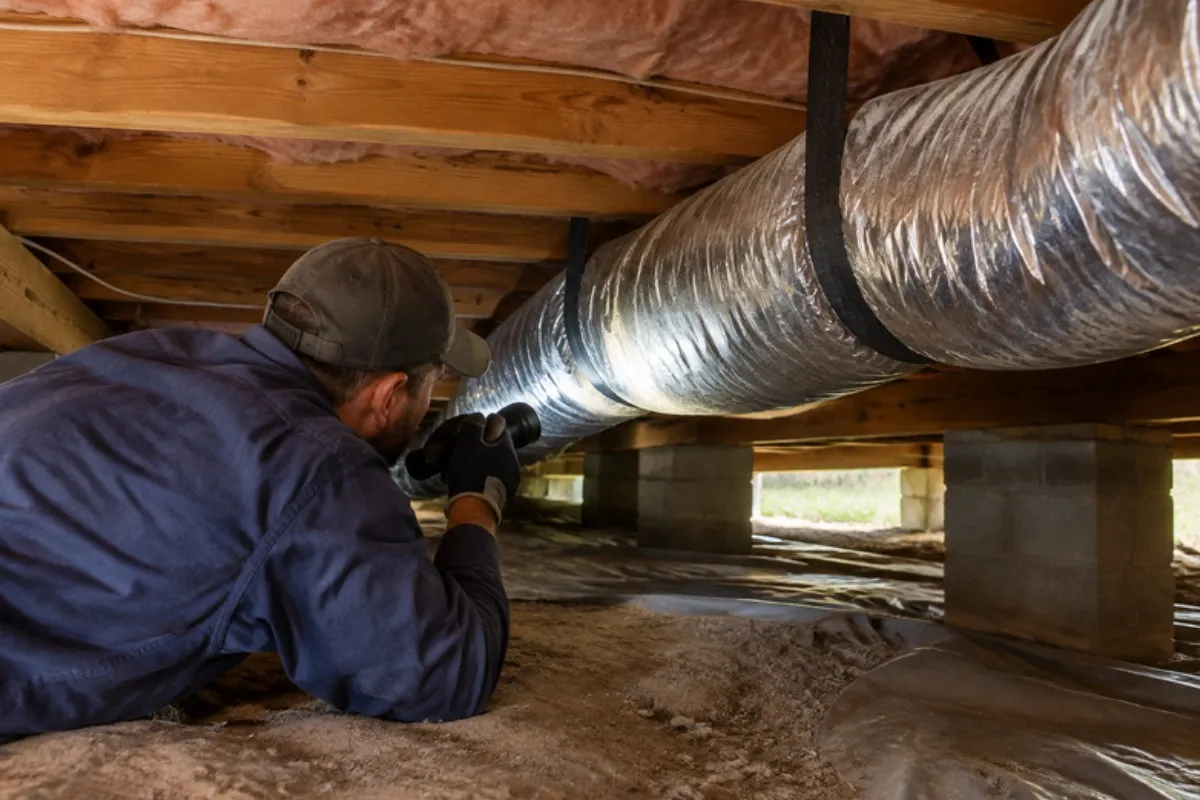
Alpharetta, about 24 miles north of downtown Atlanta, changed from a farm community into a center for technology firms and data centers, and its neighborhoods grew along with it. In many of these homes the air handler and the main supply trunks sit in the attic or a crawl space rather than inside the conditioned rooms. From May through September the air in those spaces is hot and wet while the metal carrying chilled air is cold, so water beads on any duct whose insulation jacket is torn or squashed flat. Inside the unit, the evaporator coil pulls a surprising amount of water out of the air on a muggy day, and all of it has to leave through a pan and a narrow drain line. When algae or debris slows that line, the pan stays full and the coil cabinet turns into a damp, dark box.
Homes near Big Creek and the preserved wetland between Haynes Bridge Road and Mansell Road sit close to moving and standing water, so it is worth checking crawl space humidity wherever ducts run below the floor.
Clean or replace: how it usually breaks down
| Component | Often cleaned | Often replaced |
|---|---|---|
| Sheet metal trunks and branches | Growth on bare metal; EPA says cleaning may be worth considering | Badly rusted runs |
| Fiberglass duct board or lined duct | Not effectively cleanable once wet or moldy, per EPA | Affected pieces |
| Flexible duct | Rarely | Sections that sweat or hold growth |
| Coil, pan and blower | Usually cleaned | A cracked or rusted pan |
Ask each bidder to name your duct type before you compare prices, because two quotes for duct mold removal can describe very different jobs.
What you might notice first
- A stale, earthy odor for the first few minutes after the system starts
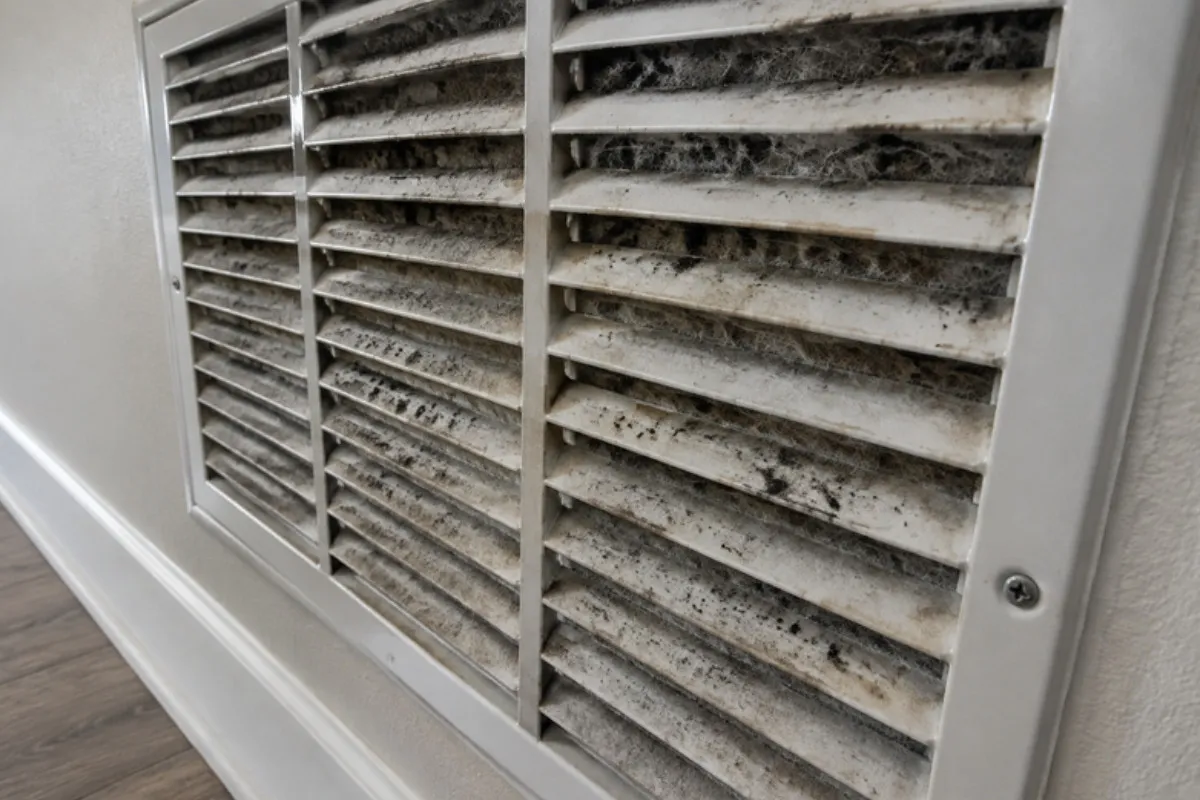
- Gray or black specks around supply grilles, often in bathrooms and bedrooms
- Water in the secondary pan, or a float switch that keeps shutting the unit off
- Rooms that feel clammy even when the thermostat is satisfied
- Fuzzy or discolored dust on the return grille
Timing in north Fulton
Growth inside a system speeds up during the long cooling season, when the coil stays wet for hours each day. Late winter or early spring, before the unit is needed, is the easiest window for opening ducts and swapping sections. EPA advises against running a system you suspect is contaminated, so if you find growth in midsummer, ask about temporary cooling while the work is planned. If replacement means cutting into ceilings or walls, ask whether a permit applies; the City of Alpharetta handles building and trade permits through Community Development's online portal.
HVAC & Air Duct Mold Removal questions in Alpharetta
Can moldy ductwork be cleaned, or does it have to be replaced?
Why does my air conditioning smell musty when it kicks on?
Will the county health department inspect mold in my vents?
What indoor humidity should I aim for?
More mold services in Alpharetta
HVAC & Air Duct Mold Removal nearby
Helpful guides
Sources
Last updated: