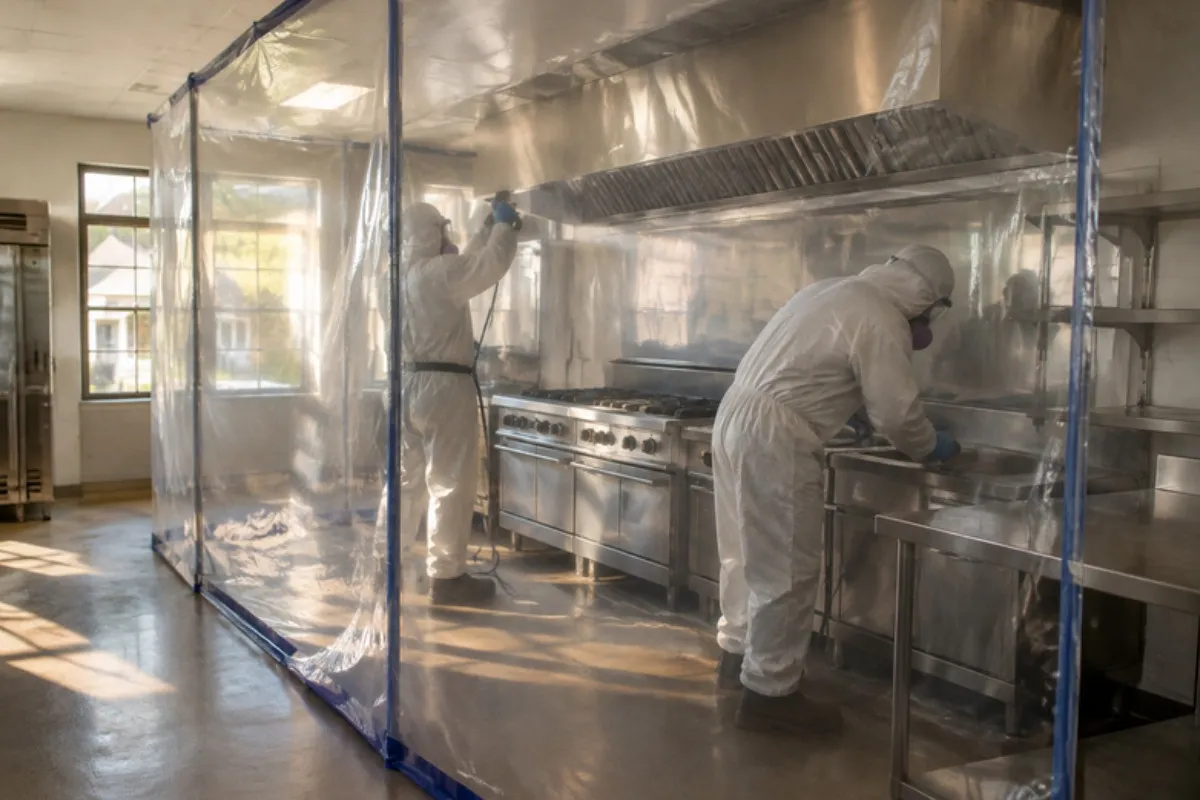
Commercial mold remediation in Alpharetta means stopping the moisture, sealing off the affected space and removing growth while the rest of the property keeps working. The scope has to account for occupants, shared air systems and the records an owner will want later. Call the number on this page to be connected with a local mold remediation company in Alpharetta.
What shapes commercial mold work in Alpharetta
Alpharetta grew from a farm town into a North Fulton center for technology firms and data centers, with a busy downtown and the Avalon mixed-use district. That means a lot of tightly controlled mechanical space, ground-floor retail under apartments, and office floors where one leak can reach several tenants. Big Creek and the wetland between Haynes Bridge Road and Mansell Road keep low-lying ground damp after heavy storms, and a 24-mile spread from downtown Atlanta doesn't spare the city from the region's long, humid summers. Most commercial mold here still starts with a roof, a plumbing riser or an air handler's condensate drain. In server rooms and other tightly controlled spaces, the bigger risk is a slow leak under a raised floor or behind equipment where nobody looks.
Small cleanup or full remediation project?
| Question | Facilities-level cleanup | Remediation project |
|---|---|---|
| Size of the growth | A few small spots on hard surfaces | More than about 10 square feet, or spread across rooms |
| Materials involved | Glass, metal, sealed counters | Ceiling tile, drywall, carpet, insulation |
| Air system | Not involved | Supply or return near the growth, or a musty air handler |
| Occupants nearby | Space can close briefly | Tenants, staff or customers must keep using adjacent areas |
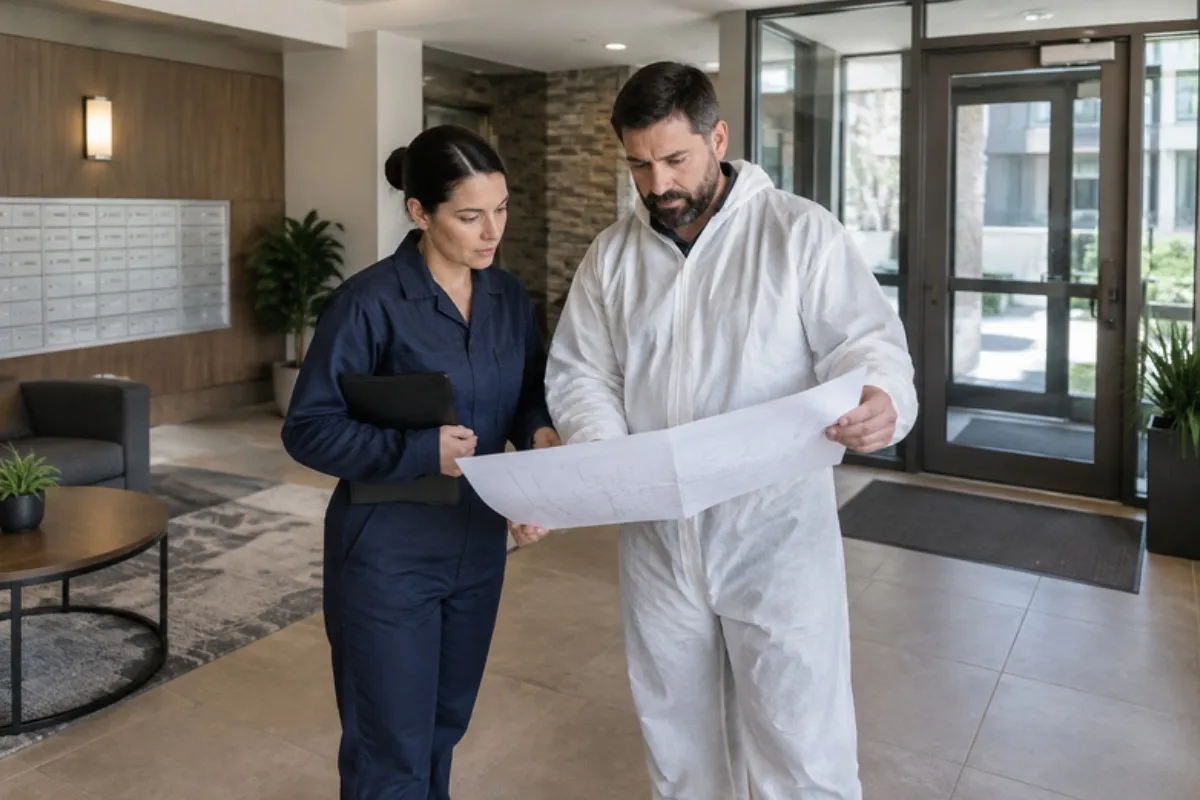
| Paperwork | Internal work order | Written scope, photos, moisture logs, clearance |
Warning signs in a building
- Stained or sagging ceiling tiles under rooftop units or roof drains
- A musty smell when the air handler kicks on in the morning
- Carpet that stays damp along an exterior wall or near a restroom
- Bubbled paint or swollen baseboard by a break room sink or ice machine
- Repeat complaints from one suite even after cleaning
Timing and seasonal notes
Summer humidity loads up cooling coils and drain pans, so problems often surface from June through September. EPA's guidance is to dry wet materials within 24 to 48 hours and keep indoor humidity under 60 percent. Many managers book containment and tear-out for nights or weekends; ask whether that adds labor cost. If rebuilding involves new drywall or framing, permits go through the City of Alpharetta Community Development department and its online portal. Alpharetta Code Enforcement handles upkeep of both residential and business properties when an owner leaves a leak unrepaired. Keep the written scope, moisture logs and clearance results with the building's maintenance file.
Commercial Mold Remediation questions in Alpharetta
Will the county health department inspect mold in a business or apartment building?
Can the building stay open while the work is done?
Should the HVAC system keep running during the work?
Can the work be scheduled after hours?
More mold services in Alpharetta
Commercial Mold Remediation nearby
Sources
- EPA: Mold Remediation in Schools and Commercial Buildings
- EPA: Mold Cleanup in Your Home
- EPA: A Brief Guide to Mold, Moisture and Your Home
- Georgia DPH: Indoor Air Quality/Mold
- Fulton County Board of Health: Environmental Health Complaints
- Wikipedia: Alpharetta, Georgia
- City of Alpharetta: Trade Permits
- City of Alpharetta: Code Enforcement
Last updated: