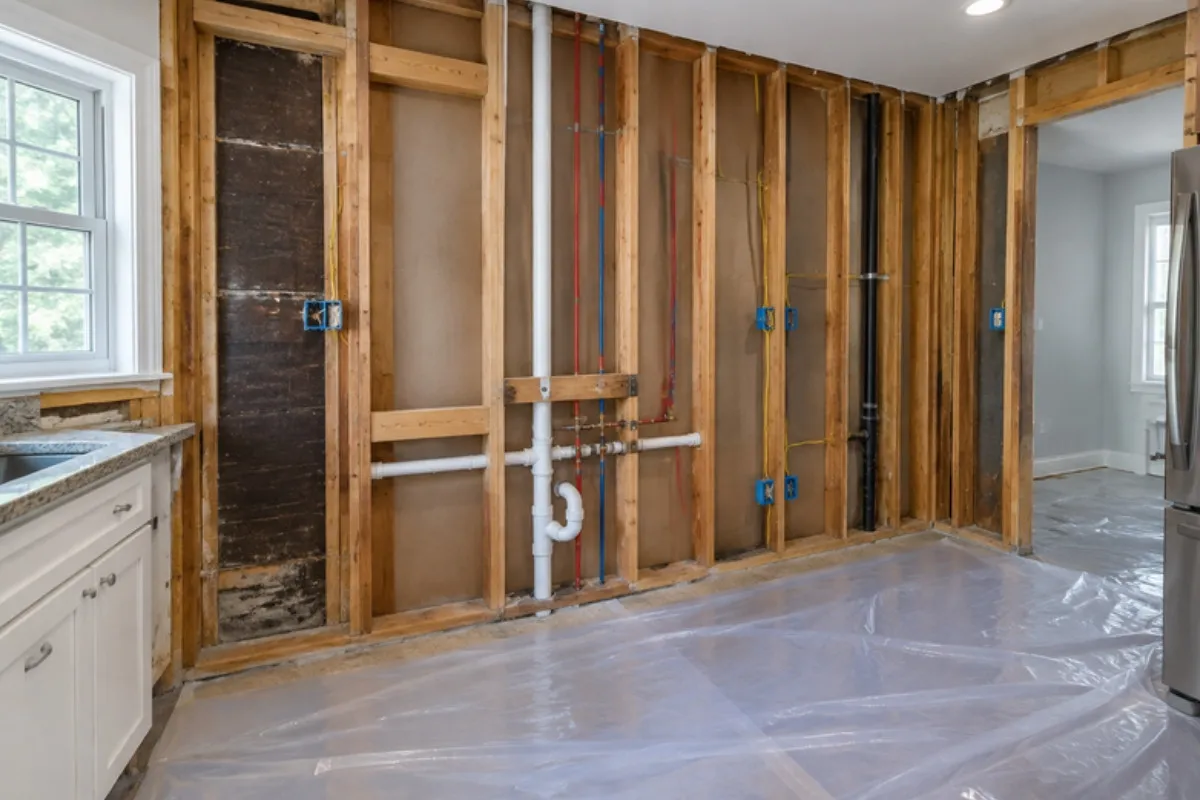
Mold in Alpharetta walls nearly always starts with water reaching the back of the drywall, whether from a supply line, a shower valve, a leaky window or damp ground against a basement wall. Fixing it means stopping that water, cutting out the stained board and wet insulation, and drying the framing before anything is closed up. Call the number on this page to be connected with a local mold remediation company in Alpharetta.
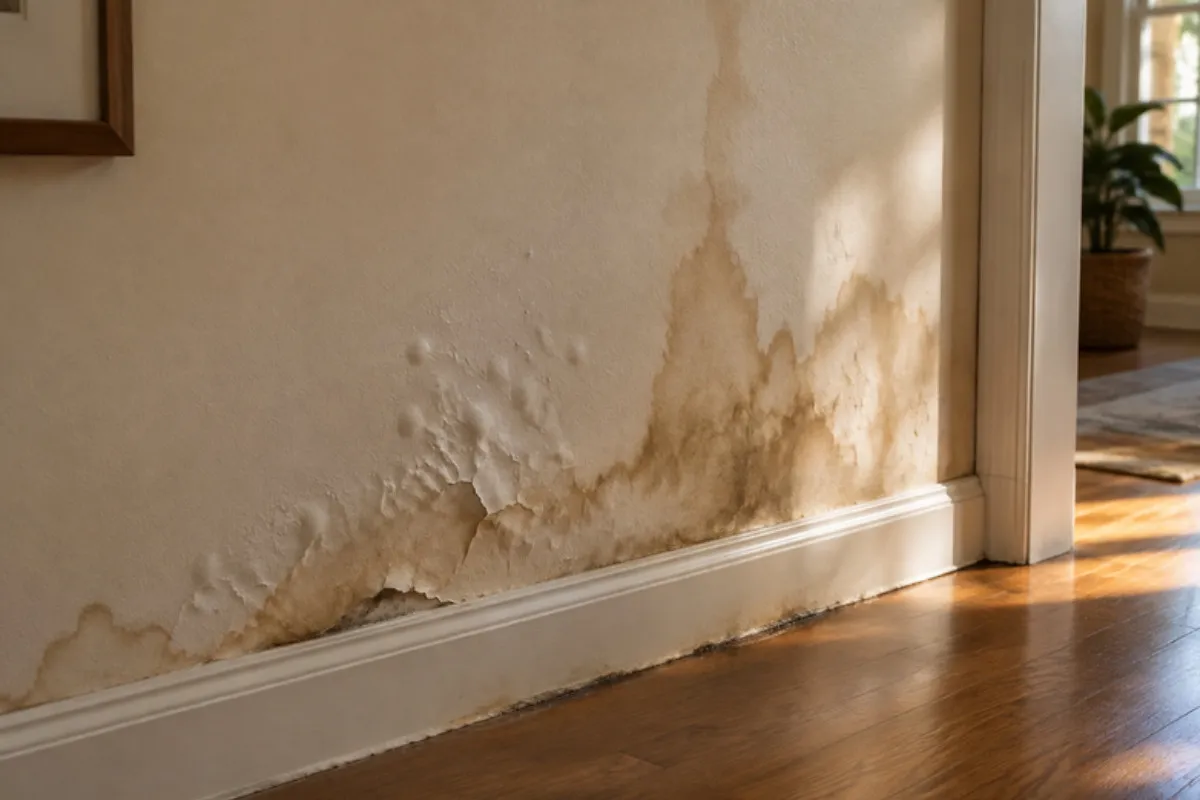
Where wall moisture comes from in Alpharetta
Alpharetta sits about 24 miles north of downtown Atlanta. Much of the city drains toward Big Creek, the stream the Big Creek Greenway follows, and a protected wetland lies between Haynes Bridge Road and Mansell Road. Homes on lower ground near water like that can have soil that stays soggy for days after a storm, and a finished basement wall backed against that soil is a common place for drywall to wick up moisture from the bottom.
Higher up in the house, the usual culprits are plumbing inside the wall, a second-floor laundry hose, the seal around a tub, and window flashing that lets wind-driven summer rain in. An air conditioning condensate line that runs through a chase can also drip for months unseen.
Wipe it, or open the wall?
| What you find | Usually enough | Usually needs more |
|---|---|---|
| Spotting on painted drywall in a steamy bathroom | Clean, dry, improve the exhaust fan | Spots return within weeks |
| Stain that grows outward | Never just paint it | Cut out the board past the stain |
| Soft or crumbling drywall | Not a cleaning job | Remove board and wet insulation, dry studs |
| Musty smell, nothing visible | Moisture meter reading first | Small inspection cut to look inside |
EPA says porous materials such as drywall and insulation often have to be thrown away once moldy, and that you should not paint or caulk over mold.
Signs to check around the house
- Paint that blisters or peels on one wall only
- Baseboards that swell, separate or feel damp
- Gray or black speckling at the bottom of a closet wall
- Odor that is strongest when you open a cabinet against an outside wall
Timing and rebuild in Alpharetta
Hot, humid months give hidden growth its best conditions, so a leak found in July spreads faster than one found in January. EPA advises drying wet materials within 24 to 48 hours. Once the wet board is out and the studs test dry, the rebuild is construction work: City of Alpharetta Community Development handles building and trade permits through its online portal, so ask the contractor whether yours needs one. The Fulton County Board of Health's environmental health complaint office says it does not respond to mold complaints.
Mold in Walls & Drywall questions in Alpharetta
Can mold be growing inside a wall with nothing showing on the surface?
Can I paint over mold on drywall?
Do I need a permit to replace drywall after mold removal?
Does wet insulation inside the wall need to be replaced?
More mold services in Alpharetta
Mold in Walls & Drywall nearby
Sources
Last updated: