In Lawrenceville, black mold removal starts with the water source, then containment, then cutting out soaked porous material and cleaning what can stay. The dark color itself does not change the plan; the size of the patch and what it grows on do. Call the number on this page to be connected with a local mold remediation company in Lawrenceville.
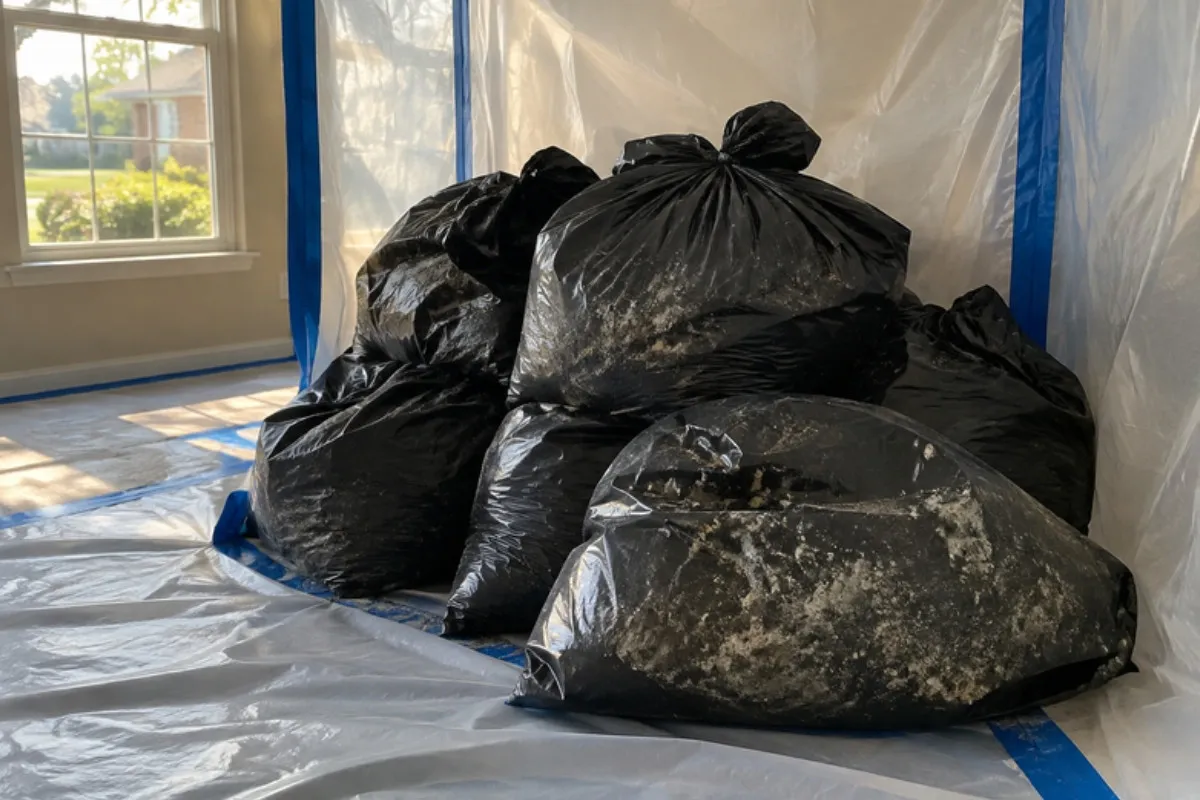
Why Lawrenceville homes grow dark mold
Lawrenceville, the Gwinnett County seat about 27 miles from Atlanta, sits in the Yellow River watershed. A Gwinnett County stormwater report placed the heaviest rain of the September 2009 floods near Lawrenceville, with parts of the watershed taking roughly 19 inches in eight days, and NWS gauges on Pew Creek, Shoal Creek and the Alcovy River at Lawrenceville crested above flood stage on September 21. Storms like that soak the red clay around foundations, and water that sits in a wall cavity or under a floor for more than a day or two is what dark mold needs.
Most cases are smaller than a flood: a slow drip under a kitchen sink, a toilet seal that weeps into the subfloor, or summer humidity condensing in a closet on an outside wall.
Wipe it, or tear it out?
| What you find | Usual approach |
|---|---|
| Spotting on tile, glass or a sealed countertop | Scrub with detergent and water, dry the surface, fix the moisture |
| Dark stain on painted drywall that keeps returning | Open the wall to see the back side; replace the board if it is soaked |
| Growth on carpet pad or ceiling tile | Bag and discard; EPA says porous items like these may have to go |
| More than about 10 square feet, or inside a cavity | Hire a remediation company to contain and remove it |
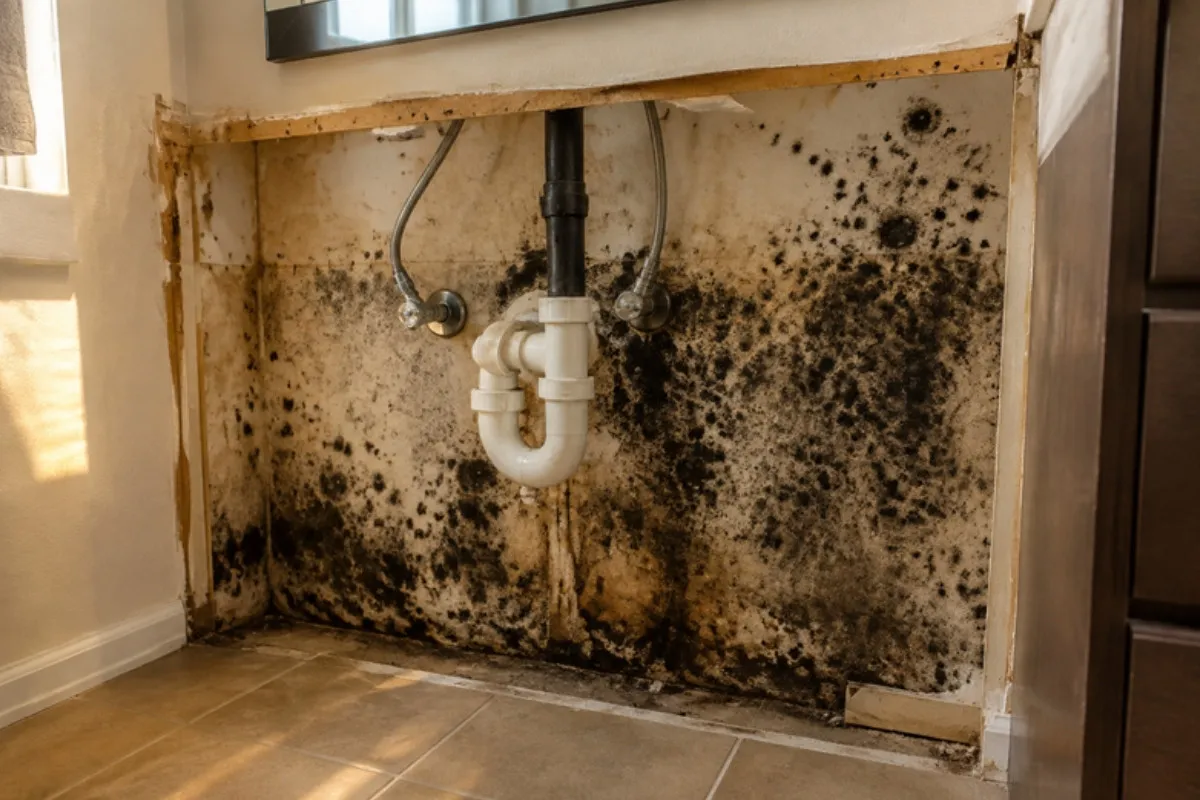
Signs it has spread past the surface
- Baseboards that feel soft or swollen
- Paint that bubbles in one spot near a bathroom or the water heater
- A musty odor that is strongest when the house has been closed up
- Black speckles along the bottom edge of drywall after a leak
Seasonal notes
Late summer is when indoor humidity runs highest and stains show up fastest, so July through September is a good time to look behind furniture on outside walls. EPA suggests keeping indoor humidity below 60 percent. If the job ends with new drywall or framing inside city limits, Lawrenceville Planning & Development handles building permits through its Licensing, Permits, and Plans portal. Georgia has no mold license, so for rebuild work ask whether the company holds a Georgia residential or general contractor license and look it up on GOALS Verify Now.
Black Mold Removal questions in Lawrenceville
Water came in during a storm and black spots followed. What first?
Is dark mold riskier than green or white mold?
Will the county health department come look at black mold?
My landlord won't fix the leak behind the mold. What are my options?
More mold services in Lawrenceville
Black Mold Removal nearby
Sources
- EPA: Mold Cleanup in Your Home
- EPA: A Brief Guide to Mold, Moisture and Your Home
- Gwinnett County Stormwater: September 2009 flood report (pdf)
- National Weather Service Atlanta: The Epic Floods of September 2009
- City of Lawrenceville: Plan Review & Permitting
- City of Lawrenceville: Code Enforcement
- GNR Health: Environmental health complaints
- Georgia DPH: Indoor Air Quality/Mold
- O.C.G.A. 44-7-13: Landlord's duties as to repairs (Justia)
- Georgia SOS GOALS: Verify Now
- Lawrenceville, Georgia (Wikipedia)
Last updated: