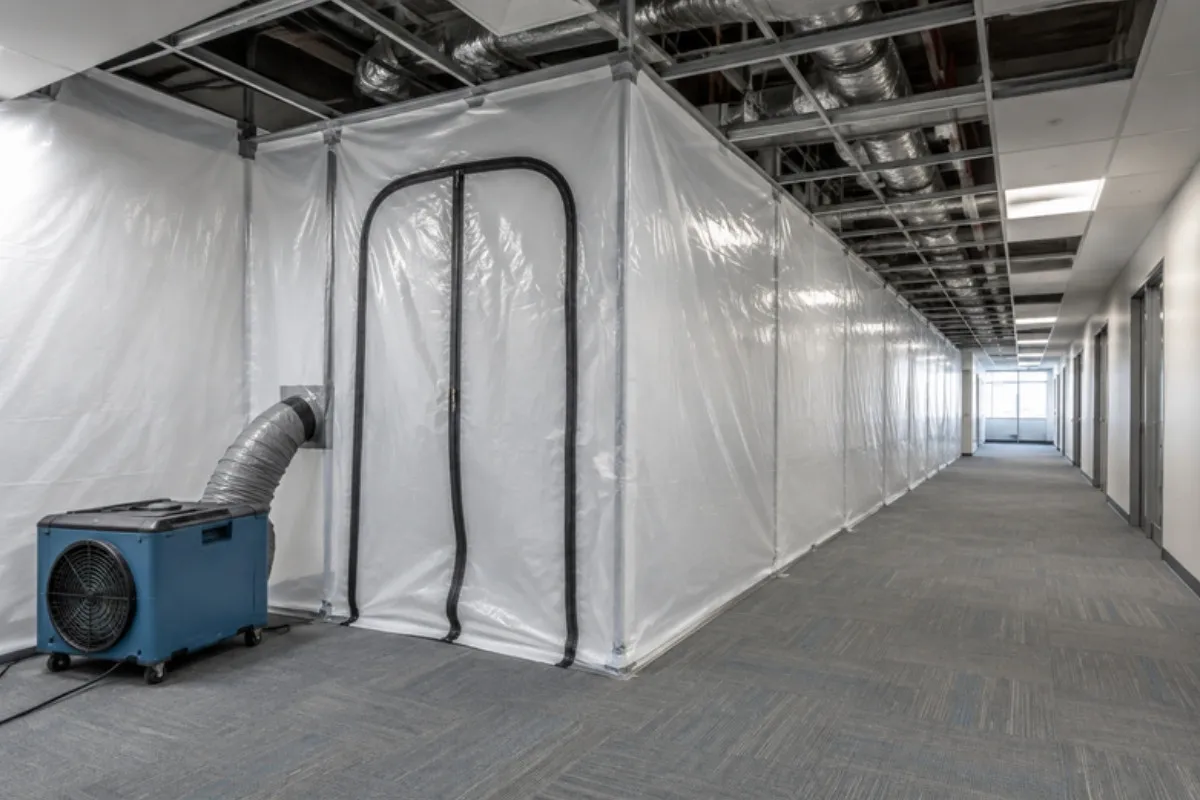
Commercial mold work in Lawrenceville comes down to stopping the water, sealing off the affected space so the rest of the building can keep operating, and removing what cannot be cleaned under a written plan. EPA has a separate guide for schools and commercial buildings that most firms work from. Call the number on this page to be connected with a local mold remediation company in Lawrenceville.
What makes Lawrenceville buildings wet
Lawrenceville sits about 27 miles northeast of Atlanta in the Yellow River watershed. Gwinnett County Stormwater Management reported that the heaviest rain of the September 2009 floods fell near Lawrenceville, with roughly 19 inches over eight days in parts of the watershed, and National Weather Service gauges in town on Pew Creek, Shoal Creek and the Alcovy River all crested above flood stage on September 21, 2009. A commercial building that took water then, or in any storm since, and was never opened up can still hold damp framing behind finished walls.
Day to day, the causes are more ordinary: flat or low-slope roofs that pond after summer thunderstorms, rooftop units with clogged condensate lines, and plumbing shared between tenant suites. Red clay holds water against slab edges and lower walls. Government offices, courthouse-area law practices, restaurants and apartment communities each bring their own mix: records storage that cannot get damp, kitchens with constant hot water, and stacked units where one leak travels down several floors before anyone reports it.
In-house maintenance or an outside company?
| Situation | Maintenance staff | Remediation company |
|---|---|---|
| Spot under about 10 sq ft on a hard surface | Usually fine with gloves, goggles and an N-95 | Not usually needed |
| Stained ceiling tiles over several offices | Can stop the leak | Containment, removal, disposal |
| Growth inside a wall shared by two tenants | Should not open it | Sealed work zone, negative air |
| Musty air from a rooftop unit | Shut it down | Assess the unit and ductwork |
Signs worth a closer look
- Brown rings or sagging in suspended ceiling tile.
- Carpet that stays damp near exterior doors or restrooms.
- A musty smell that gets stronger when the HVAC starts in the morning.
- Bubbling paint or baseboards pulling away along a lower wall.
Timing and permits
EPA says wet materials should be dried within 24 to 48 hours, so the first job after any leak is drying, not cleaning. Late summer, when humidity runs high and storms stack up, is when slow leaks turn into visible growth. Removal itself is not permitted work, but if walls, ceilings or mechanical equipment get rebuilt, the City of Lawrenceville Planning & Development office at City Hall handles plan review and building permits through its LPP portal. Owners of apartment communities should also know the city runs a Multi-Family Rental Housing Ordinance with a compliance certificate.
Commercial Mold Remediation questions in Lawrenceville
Can the business stay open while the mold is removed?
Does rebuilding after remediation need a permit?
Should the same company test and remediate?
What records should the owner or manager keep?
More mold services in Lawrenceville
Commercial Mold Remediation nearby
Helpful guides
Sources
- EPA: Mold Remediation in Schools and Commercial Buildings (pdf)
- EPA: Mold Cleanup in Your Home
- Gwinnett County Stormwater Management: September 2009 flood report (pdf)
- National Weather Service Atlanta: The Epic Floods of September 2009
- City of Lawrenceville: Plan Review & Permitting
- City of Lawrenceville: Code Enforcement
- Angi: How to Hire a Mold Remediation Company
- Georgia DPH: Indoor Air Quality/Mold
Last updated: